
Wooden Slatted Acoustic Panels: How They Work, and How They Differ From Wood Wool
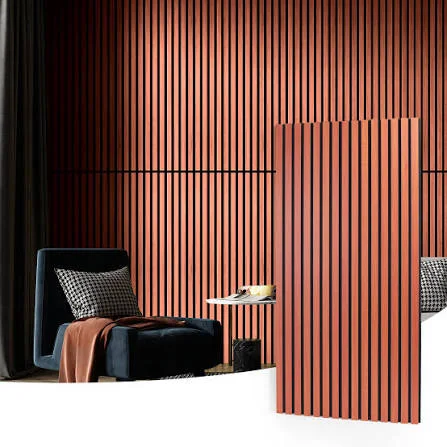
Wooden slatted acoustic panels combine solid wood slats mounted over a sound-absorbing felt or fabric backing, where the gaps between slats let sound pass through to the absorptive layer while the wood face delivers a warm, architectural finish.
This is a different construction and a different visual result from wood wool panels, which are a single fibrous material that is itself both the absorptive layer and the visible surface. The two are often confused because both deliver a natural, wood-toned acoustic finish, but they’re built differently and suit different design intents.
Choosing between them is primarily a design decision as much as an acoustic one. Slatted panels give a clean, linear, architectural look with visible wood grain, while wood wool gives a more textured, rustic finish. Both can hit similar acoustic performance targets, so the right choice usually comes down to which aesthetic fits the space.
This guide covers how wooden slatted acoustic panels are constructed, how they compare to wood wool panels, and where each is typically specified on UAE projects. It draws on the wooden slatted and wood wool acoustic panel ranges Opus Acoustic supplies for commercial, hospitality, and residential interiors across the UAE.

How Wooden Slatted Acoustic Panels Are Constructed
A slatted panel consists of three layers: a backing board or batten substrate providing structure, an acoustic felt or fabric layer that performs the actual sound absorption, and solid or veneered wood slats fixed over the top with gaps between them.
Sound passes through the gaps to reach the absorptive felt layer behind, while the wood slats remain the visible, touchable surface—meaning the acoustic performance and the visual finish are provided by two different materials working together, rather than a single material doing both jobs.

Wooden Slatted Panels vs. Wood Wool Panels
Construction
Slatted panels layer solid wood over an absorptive backing; wood wool panels are a single compressed fibrous material (typically wood shavings bound with cement or mineral binder) that is both structural and absorptive in one.
Visual Character
Slatted panels present a linear, architectural pattern with visible wood grain and clean gap lines. Wood wool panels have a more textured, fibrous surface appearance, often associated with a rustic or industrial aesthetic.
Acoustic Performance
Both can achieve comparable absorption coefficients depending on the specific product, felt thickness, and slat spacing – neither is inherently superior acoustically; the right choice depends more on matching the product’s actual tested performance to the room’s target.
Installation and Weight
Slatted panels are generally lighter per square metre than wood wool panels, which can be a relevant consideration for ceiling applications where structural load capacity is limited.
Where Wooden Slatted Panels Are Commonly Specified in the UAE
Feature Walls in Hospitality and Corporate Lobbies
The linear, architectural look of slatted panels suits spaces wanting a refined, design-led acoustic treatment that doubles as a visual focal point rather than a purely functional surface.
Boardrooms and Executive Offices
Slatted wood panels deliver acoustic control alongside a premium material palette often specified in executive and boardroom interiors.
Ceiling Applications
Slatted panels’ relatively lighter weight makes them a practical choice for ceiling-mounted acoustic treatment where structural load is a consideration.
Residential and Home Theatre Applications
The warm, architectural character of slatted wood panels suits residential interiors and home theatre spaces wanting acoustic control without an overtly commercial or industrial finish.
How a Slatted Panel Specification Is Developed, Step by Step
1. Acoustic Target Setting
The room’s absorption target – typically informed by RT60 or NRC requirements – is established first, based on the space’s function.
2. Slat Spacing and Felt Selection
Slat width, gap spacing, and felt thickness are selected to achieve the required absorption coefficient – wider gaps and thicker felt generally increase absorption, within the design’s visual constraints.
3. Wood Species and Finish Selection
Wood species, stain, or veneer finish is selected to match the project’s material palette, independent of the acoustic specification underneath.
4. Coverage and Placement Planning
Panel coverage is planned against the surfaces actually driving the room’s acoustic gap, rather than applied decoratively without reference to where treatment is most needed.
5. Structural and Fixing Detail
Fixing method is confirmed against the substrate and, for ceiling applications, structural load capacity.
6. Installation
Panels are installed with attention to consistent slat alignment and gap spacing across the full treated area, since this is a visually prominent architectural detail as much as an acoustic one.
What Gets Missed Without Proper Specification
- Slat spacing selected purely for visual effect without reference to the felt backing’s actual absorption performance at that spacing
- Panels specified for ceiling application without confirming the structure can support the combined weight across the full coverage area
- A design-led material choice made without first establishing whether slatted panels or wood wool actually suits the room’s specific acoustic target
- Inconsistent slat alignment across a large feature wall, undermining the clean architectural look the material was chosen for
Wooden Slatted vs. Wood Wool, at a Glance
| Factor | Wooden Slatted Panels | Wood Wool Panels |
|---|---|---|
| Construction | Wood slats over acoustic felt backing | Single fibrous material, structural and absorptive |
| Visual character | Linear, architectural, visible grain | Textured, fibrous, rustic |
| Typical weight | Lighter | Heavier |
| Best suited to | Feature walls, boardrooms, ceilings | Rustic/industrial-finish spaces, broader surface coverage |
How Opus Acoustic Supplies Wooden Slatted Panels
Opus Acoustic supplies wooden slatted acoustic panels alongside wood wool and other acoustic panel types, matched to the room’s acoustic target and the project’s design intent rather than a single default finish. For the fibrous alternative, see our guide on acoustic wood wool and perforated panels.
Slatted panels and wood wool can hit the same acoustic number on paper. The decision between them is usually about which one the room should look like, not which one performs better.
Frequently Asked Questions
Both can achieve comparable acoustic performance depending on the specific product and configuration – the choice is generally driven more by visual preference than a meaningful performance gap.
Yes, and their relatively lighter weight compared to wood wool panels often makes them a practical choice for ceiling applications with structural load constraints.
A range of wood species, stains, and veneer finishes are typically available – contact Opus Acoustic directly for the current range and project-specific options.
The gaps are intentional – sound passes through them to reach the absorptive felt backing behind the slats, which is where the actual acoustic absorption happens.
Yes, their warm architectural character and solid acoustic performance make them a common choice for residential and home theatre interiors.
Spacing is selected based on the required absorption coefficient for the room, balanced against the visual gap-to-slat ratio the design calls for – wider gaps generally increase absorption within the system’s design range.
Talk to Us About Wooden Slatted Panels
Get acoustic performance with an architectural wood finish, properly specified.
Phone: +971 50 826 5672
Coverage: Dubai, Abu Dhabi, Sharjah & all UAE Emirates