
What Is Vitreous Enamel Cladding, and Why Is It Used on UAE Facades?
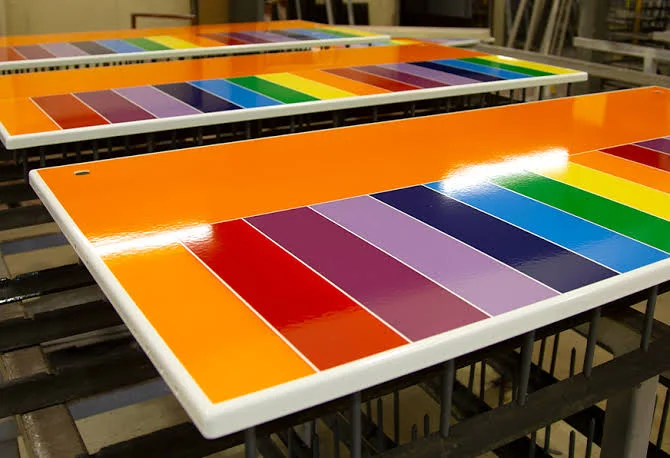
Vitreous enamel cladding is a steel panel fused with a glass-based enamel coating at high temperature, producing a facade surface that combines steel’s structural properties with a colour-stable, chemically inert surface that resists fading, staining, and graffiti far more effectively than conventional painted or powder-coated metal cladding. It’s specified where long-term colour retention and surface durability matter more than the lighter weight or wood-effect finishes other metal cladding systems offer.
The enamelling process – fusing glass to steel at temperatures typically exceeding 800°C produces a fundamentally different surface than any paint or powder coating applied to metal. That surface is what makes vitreous enamel cladding a specific choice for facades expected to hold their appearance for decades under sustained UAE sun exposure, rather than a general-purpose alternative to other cladding types.
This guide covers how vitreous enamel cladding is made, what makes its performance different from painted or powder-coated metal alternatives, and where it’s most commonly specified on UAE projects. It draws on the Vitreous Enamel architectural cladding Opus Building Materials supplies as part of its architectural cladding solutions.
How Vitreous Enamel Cladding Is Made
A steel substrate panel is coated with a glass-based enamel frit, then fired at high temperature, fusing the enamel to the steel to form a single, chemically bonded surface rather than a separately applied coating layer sitting on top of the metal. This fusion is what distinguishes vitreous enamel from powder coating or paint, which remain distinct layers bonded to the surface rather than fused into it at a molecular level.
Why the Enamel Surface Performs Differently Than Painted or Powder-Coated Metal
Colour Stability Under UV Exposure
Painted and powder-coated finishes can fade or chalk under sustained UV exposure over years. The glass-based enamel surface is inherently more resistant to UV-driven colour change, holding its original appearance significantly longer under the same exposure conditions.
Chemical and Stain Resistance
The fused glass surface is chemically inert and non-porous, resisting staining from pollution, atmospheric deposits, and most chemical exposure far more effectively than a painted surface, which can absorb or hold staining over time.
Graffiti Resistance and Cleanability
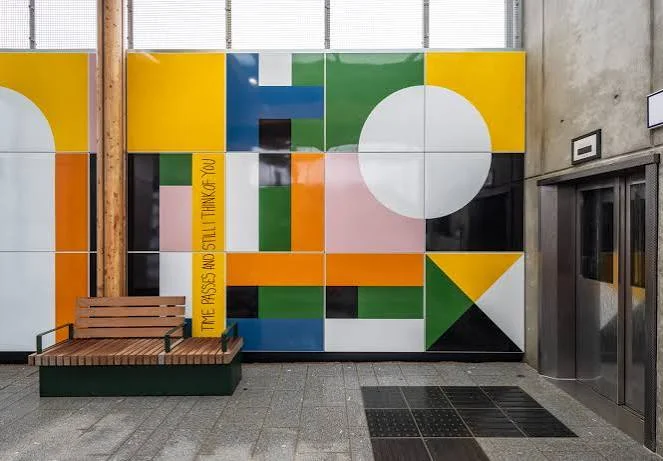
The non-porous enamel surface allows graffiti and marking to be cleaned without leaving the ghosting or staining that can persist on painted surfaces after cleaning, making it a common specification for facades in publicly accessible areas.
Fire Performance
As a glass-fused steel product, vitreous enamel cladding offers non-combustible facade performance relevant to fire code and Civil Defense compliance on commercial and high-rise applications.
Where Vitreous Enamel Cladding Is Commonly Specified in the UAE
High-Rise Commercial Facades
Buildings where facade access for maintenance or recoating is difficult and costly benefit particularly from a surface engineered to hold its appearance over decades without repainting.
Metro, Transit, and Public Infrastructure
Public transport and infrastructure facades are exposed to high foot traffic, pollution, and graffiti risk, making the combination of chemical resistance and cleanability a practical specification driver beyond aesthetics alone.
Airport and Large-Scale Public Buildings
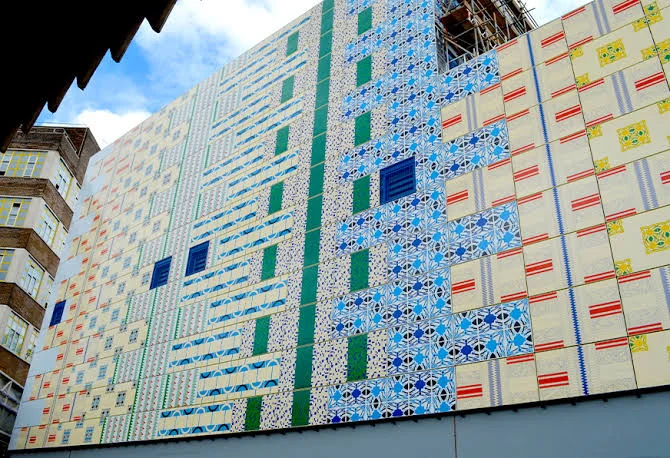
Large public facilities with extensive facade areas and long design-life expectations specify vitreous enamel where long-term appearance retention offsets a higher initial material cost against reduced lifecycle maintenance.
Feature and Signature Facades
Projects wanting a specific, saturated colour that needs to remain consistent and vivid over the building’s lifetime specify vitreous enamel for its colour stability, independent of any functional driver.
How a Vitreous Enamel Specification Is Developed, Step by Step
1. Colour and Finish Selection
A specific colour is selected from the available enamel range, with attention to how the fired finish will read under UAE’s high ambient light levels.
2. Panel Sizing and Format
Panel dimensions and format are determined by the facade design and the firing process’s practical size constraints for the steel substrate.
3. Structural and Fixing Detail
Fixing method and supporting structure are detailed to suit the building’s structural grid, consistent with standard metal facade fixing principles adapted for the enamel panel’s specific handling requirements.
4. Fire and Code Compliance Confirmation
Facade fire performance is confirmed against the building’s height and occupancy classification, leveraging the material’s non-combustible characteristics where relevant.
5. Fabrication and Firing
Panels are coated and fired to specification, a process with longer lead times than standard painted or powder-coated metal due to the firing stage itself.
6. Installation
Panels are installed with attention to handling care, since the fired enamel surface, while chemically robust, can be susceptible to impact damage during transport and installation if not handled correctly.
What Gets Missed Without Proper Specification
- Lead times underestimated for a project timeline, since the firing process adds time compared to standard painted metal cladding
- Panel handling during transport and installation treated the same as standard metal cladding, risking impact damage to the fired surface
- A lower-cost powder-coated alternative selected for a facade where decades-long colour retention was actually the driving requirement, leading to premature fading
- Colour selection made without accounting for how the fired finish reads under UAE’s specific light conditions compared to a rendered sample
Vitreous Enamel vs. Painted/Powder-Coated Metal Cladding
| Factor | Vitreous Enamel | Painted / Powder-Coated Metal |
|---|---|---|
| Colour stability under UV | High, holds appearance for decades | Moderate, fades or chalks over years |
| Chemical and stain resistance | High, non-porous fused surface | Moderate, coating can absorb staining |
| Graffiti cleanability | Cleans without ghosting | Can leave residual staining |
| Fire performance | Non-combustible steel-glass fusion | Depends on coating and substrate |
| Lead time | Longer, due to firing process | Typically shorter |
| Typical use case | Long-design-life, high-exposure facades | General facade and cladding applications |
How Opus Building Materials Supplies Vitreous Enamel Cladding
Opus Building Materials supplies Vitreous Enamel architectural cladding as part of its architectural cladding range, alongside related facade products including perforated metal cladding and Technowood wood-effect aluminium profiles, for commercial, hospitality, and public infrastructure projects across the UAE.
A facade repainted every few years to maintain its colour has a real lifecycle cost most initial budgets don’t fully account for. Vitreous enamel exists specifically to remove that recurring cost from the equation.
Frequently Asked Questions
1. How is vitreous enamel cladding different from powder-coated metal?
Vitreous enamel fuses a glass-based coating to steel at high temperature, forming a single bonded surface, whereas powder coating applies a separate coating layer to the metal. The fused surface offers significantly better long-term colour and chemical resistance.
2. Is vitreous enamel cladding more expensive than standard metal cladding?
Initial material and lead time costs are typically higher, but this is often offset over the building’s lifetime by reduced maintenance and recoating requirements compared to painted alternatives.
3. Can vitreous enamel cladding be cleaned after graffiti or vandalism?
Yes, its non-porous surface allows most graffiti and marking to be cleaned without the ghosting or permanent staining that can occur on painted surfaces.
4. Is vitreous enamel cladding suitable for high-rise buildings?
Yes, its non-combustible fire performance and long-term durability make it a common specification for high-rise facades, particularly where maintenance access is difficult.
5. How long does vitreous enamel cladding typically last before needing replacement?
It’s designed for multi-decade service life with minimal maintenance, substantially longer than typical painted or powder-coated metal cladding under the same exposure conditions.
6. Does vitreous enamel cladding come in a wide range of colours?
Yes, a range of colours is available contact Opus Building Materials directly for the current range and project-specific colour matching options.
Talk to Us About Vitreous Enamel Cladding
Get a facade finish built to hold its colour for decades, not years.
Phone: +971 50 826 5672
Coverage: Dubai, Abu Dhabi, Sharjah & all UAE Emirates