
What Happens During an Acoustic Site Survey? (UAE Guide)
If you’ve ever asked for an acoustic quote and received a price with no site visit involved, that quote is a guess. A genuine acoustic survey is a measured, evidence-based process and skipping it is the single most common reason acoustic treatment projects underperform or run over budget.
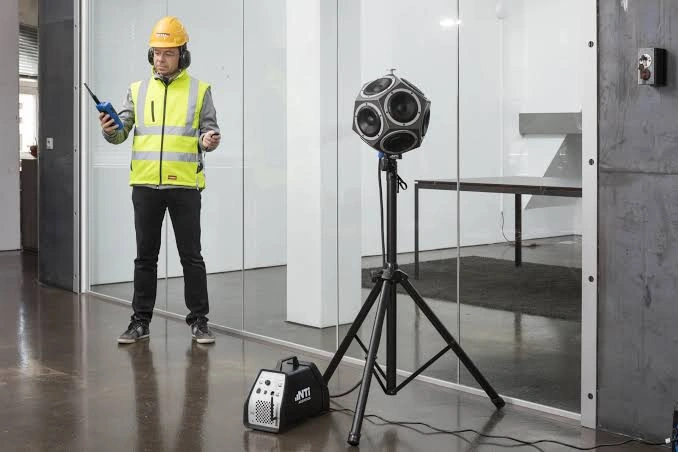
This guide walks through exactly what a proper acoustic site survey involves, the data it produces, and why that data – not assumption – should drive every panel, baffle, or soundproofing decision that follows. It draws on survey methodology used by Opus Acoustic, the specialist acoustic division of Opus Building Materials, across commercial and residential projects in the UAE.
Why a Site Survey Comes Before a Quote, Not After
Acoustic treatment is not a one-size-fits-all product. The same office, fitted with the same panels in the wrong places or the wrong quantity, can either solve a noise problem completely or barely make a dent in it. The variable isn’t the panel – it’s the data behind the decision.
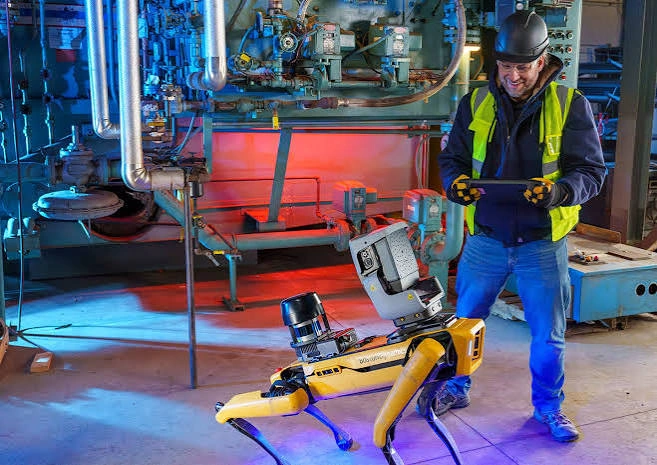
A site survey establishes three things that no remote quote can determine accurately:
- How the room currently behaves acoustically – measured, not estimated
- Which surfaces are actually causing the problem, as opposed to which ones are most visible
- Whether the issue is even one that acoustic panels can solve, or whether it requires soundproofing, mechanical isolation, or both
The reverberation time of a room – how long sound takes to decay after the source stops – is the core metric used here. It’s measured using a method standardized by ASTM International, specifically ASTM C423, the Standard Test Method for Sound Absorption and Sound Absorption Coefficients by the Reverberation Room Method. This is the same standard manufacturers use to publish NRC ratings on their products, so measuring a room against it means your survey data and your product data speak the same language.
UAE-Specific Factors a Site Survey Needs to Account For
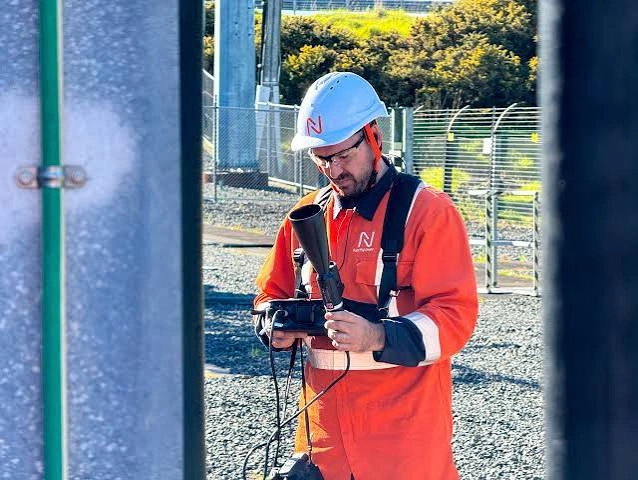
Acoustic surveys conducted in Dubai, Abu Dhabi, or Sharjah have to factor in conditions that don’t apply everywhere:
Building Materials
Glass curtain walls, polished marble, and exposed concrete dominate UAE commercial interiors. These are all highly reflective surfaces, which means rooms that look architecturally impressive often measure far above their acoustic comfort target before any treatment is added.
HVAC and Climate Control
Continuous air conditioning is unavoidable in the UAE climate. HVAC noise is a frequent contributor to poor acoustic comfort and is easy to miss if a survey focuses only on wall and ceiling reflections rather than ambient background noise levels.
Fire and Building Code Compliance
Acoustic products specified for commercial UAE projects need to meet fire safety requirements set by local Civil Defense authorities. A survey that doesn’t flag this early can lead to a product being specified, ordered, and rejected at inspection stage – an expensive sequence to get wrong.
The Survey Process, Step by Step
1. Scoping Call
Before any site visit, the surveying team gathers context: what the space is used for, what the complaint is (if any), and what drawings or plans already exist. This keeps the visit itself focused.
2. Room and Surface Measurement
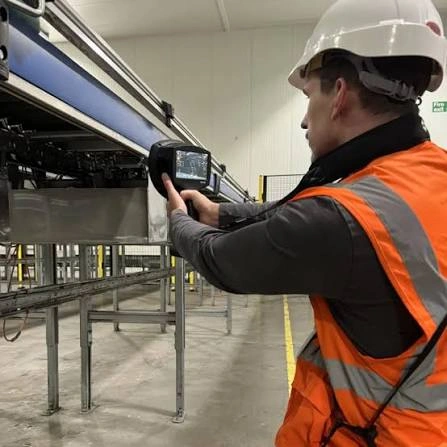
On site, dimensions and ceiling height are recorded, and every surface – walls, floor, ceiling, glazing – is logged for its acoustic character: reflective, absorptive, or somewhere in between.
3. Reverberation Time Measurement
Where the project justifies it, RT60 is measured directly rather than estimated from surface tables. This single number tells you exactly how far the room is from its target, and therefore how much absorption is genuinely needed – not how much someone is trying to sell you.
4. Noise Source Check
HVAC units, adjoining plant rooms, road noise, and shared-wall noise from neighbouring units are all logged separately, because panels treat reflections – they don’t stop noise transfer between spaces. That distinction matters for setting the right expectations before any product is recommended.
5. Site Constraints
Ceiling access, structural fixing points, and existing finishes are documented, since these determine what installation method is actually viable – not just what’s acoustically ideal on paper.
6. Written Findings
A proper survey ends with a written summary: measured RT60 against target, the surfaces driving the gap, and a coverage recommendation – something you can review and question before committing to a quote.
What a Survey Often Reveals (That a Remote Quote Misses)
- The wrong frequency range was about to be targeted – flat panels were the plan, but the actual problem was low-frequency boom needing corner bass treatment
- Coverage was concentrated on the most visible wall, while the true primary reflection points – often ceiling and side walls – were left untreated
- A meaningful share of the noise complaint was coming from HVAC or an adjoining space, which no amount of wall panelling would fix
- The ceiling grid wasn’t rated to carry the suspended baffle system that had been proposed
Spaces Where a Survey Makes the Biggest Difference
| Space Type | What the Survey Typically Catches |
|---|---|
| Open-plan offices | Glass partitions and hard ceilings causing far higher RT60 than comfortable speech requires |
| Hotel/restaurants | Mixed-use acoustic conflict – speech clarity vs. natural reverberation for music or events |
| Classrooms | RT60 well above recommended speech-intelligibility ranges for teaching spaces |
| Healthcare consultation rooms | Sound transfer between adjoining rooms compromising patient privacy |
| Recording studios | Low-frequency buildup requiring bass trapping, missed by surface-only assessment |
| Industrial floors | Occupational noise levels relevant to UAE workplace exposure limits |
How Opus Acoustic Approaches the Survey
This is the methodology Opus Acoustic applies across the projects it surveys for Opus Building Materials clients: measured RT60 data where the project warrants it, surface-by-surface mapping, noise source separation, and a written report before any product specification is proposed. The goal is straightforward – a client should be able to see the evidence behind a recommendation, not just take a sales pitch on faith.
A survey costs a fraction of what a wrongly specified acoustic installation costs to fix. That’s the entire argument for doing it properly.
Frequently Asked Questions
It depends on the scope – a single-room assessment for a small office is far less involved than a multi-floor commercial survey. Many providers, including Opus Acoustic, offer a free initial consultation, with a fee only applying once measured RT60 testing and a full written report are required.
Visual quality and acoustic quality are unrelated. Glass, polished stone, and painted gypsum board are all highly reflective – a finished, attractive space can still have a reverberation time several times higher than what’s comfortable for conversation.
If the problem is echo, noise build-up, or poor speech clarity within a room, that’s acoustic treatment. If the problem is sound coming through from a neighbouring room or the corridor, that’s soundproofing. A site survey is what tells you which one you’re actually dealing with – and often it’s a bit of both.
As a general guide, offices and meeting rooms are typically comfortable in the 0.4 to 0.6 second range. Anything notably higher usually means speech clarity is being compromised, which a survey will confirm with an actual measurement rather than a guess.
Yes. Even with a preferred product in mind, a survey confirms the right coverage percentage and placement. Skipping this step is how budget gets wasted on the wrong quantity in the wrong location.
Yes. A survey is an assessment, not a sales commitment. You’re free to take the findings and get quotes elsewhere, or decide not to proceed at all.
Book an Acoustic Site Survey
Get measured, evidence-based recommendations before you spend on treatment.
+971 50 826 5672