
How to Evaluate an Acoustic Installation Company’s Workmanship in the UAE
Key Takeaway & Decision Guide
Audience & Target Use Case: Designed specifically for UAE project managers, architects, commercial fit-out contractors, and property owners seeking reliable sound isolation and room acoustics performance across Dubai, Abu Dhabi, and Sharjah commercial and residential builds.
Core Finding: Acoustic product quality accounts for only half of real-world acoustic performance. Incomplete junction sealing, substrate flaws, or fixing errors can reduce rated laboratory sound isolation by over 50%. Always evaluate installers based on junction detailing, site photos, and specification adherence rather than product-only datasheets.
Acoustic installation quality is determined less by the product installed than by how it’s installed – junction sealing, fixing method, and coverage continuity are what separate a correctly performing system from one that looks identical but underperforms its rated target. Two rooms fitted with the same panel can produce measurably different results purely because of installation quality.
This is the part of an acoustic project that’s hardest to evaluate before hiring, because workmanship problems are often invisible on a finished wall a panel that looks perfectly installed can still have an unsealed gap behind it undermining the whole assembly’s performance. This guide covers what actually separates good acoustic installation workmanship from poor workmanship, and what to check for before and after hiring an installation company on a UAE project.
This guide covers the workmanship factors that determine whether an acoustic installation performs as specified, how to evaluate an installation company before hiring, and what to check once work is complete. It draws on the installation standards Opus Acoustic applies across commercial and residential acoustic projects in the UAE.
Why Installation Quality Matters as Much as Product Selection
An acoustic product’s published performance rating is achieved under laboratory conditions (tested under standards such as ISO international building standards) with correct installation. Any deviation from that installation method an incomplete seal, incorrect fixing spacing, a gap at a junction reduces real-world performance below the rated figure, sometimes significantly. This means a well-specified project can still underperform if the installation itself doesn’t match how the product was tested. For detailed solutions on soundproofing materials, explore our specialized acoustic products and building materials.
The Workmanship Factors That Actually Determine Performance
Junction and Seal Detailing
Where a panel meets a wall, ceiling, or adjoining panel, an unsealed or poorly sealed junction is one of the most common causes of an acoustic installation underperforming its target sound takes the path of least resistance, and a gap is exactly that.
Fixing Method and Spacing
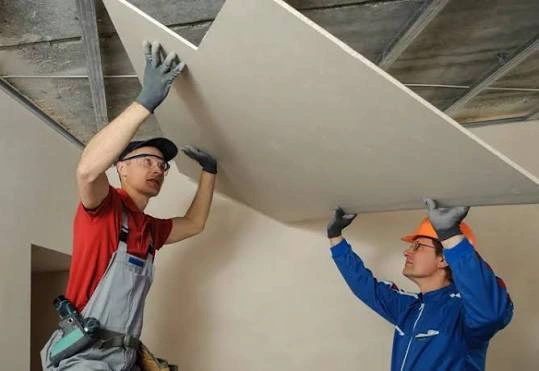
Panels fixed with incorrect spacing or an inappropriate method for the substrate can loosen over time or fail to sit flush against the surface, both of which affect acoustic performance and long-term durability precise anchoring ensures systemic stability over time.
Coverage Continuity
Acoustic coverage calculated to meet a target assumes continuous treatment across the specified area. Gaps left around fixtures, service outlets, or awkward geometry reduce actual coverage below what was modelled, even if the panel quantity ordered was technically correct.
Substrate Preparation
Installing acoustic panels onto an unprepared or unsuitable substrate – uneven surfaces, inadequate structural fixing points – can compromise both the finish and the acoustic seal, regardless of how good the panel itself is. Proper leveling and surface bonding are fundamental prerequisites.
What Distinguishes a Genuinely Skilled Acoustic Installation Team
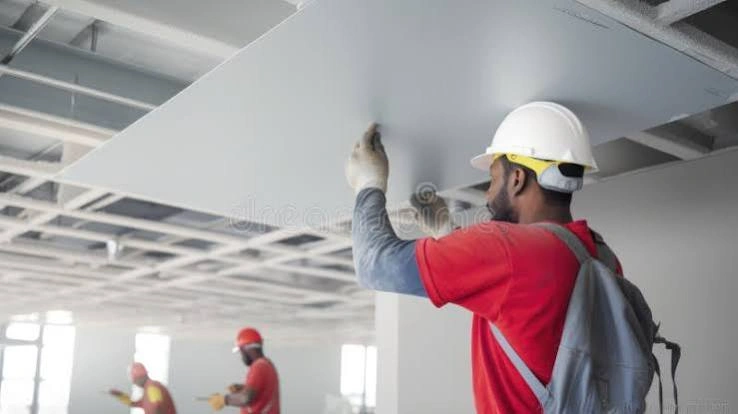
Acoustic installation is a distinct trade skill from general fit-out or ceiling work, even though the two overlap. A team with genuine acoustic installation experience typically demonstrates this through a few consistent behaviours:
- They reference the original acoustic specification during installation, not just a general product datasheet
- They flag substrate or site conditions that could compromise performance before proceeding, rather than installing regardless
- They understand why junction sealing matters acoustically, not just cosmetically
- They can explain how their installation method relates to the product’s tested performance rating
How to Evaluate an Acoustic Installation Company Before Hiring
1. Ask for Acoustic-Specific Installation Experience
General fit-out or ceiling installation experience doesn’t guarantee acoustic installation competence. Ask specifically about projects where acoustic performance, not just appearance, was the deliverable.
2. Ask How They Handle Junction and Seal Detailing
A team with genuine acoustic installation knowledge should be able to describe their standard approach to sealing junctions and penetrations without being prompted for specifics.
3. Request Site Photos From Previous Projects, Not Just Finished Shots
Photos taken during installation – showing fixing methods, junction treatment, and substrate condition reveal far more about workmanship than a polished final photo does.
4. Clarify Whether They Work From the Original Specification
Confirm the installer is working directly from the acoustic specification and target, not just a general product installation guide disconnected from the project’s actual performance requirement.
5. Ask What Happens if Site Conditions Differ From the Specification
A skilled installer has a process for flagging and resolving site conditions that don’t match what was assumed at specification stage, rather than proceeding and hoping the discrepancy doesn’t matter.

What to Check Once Installation Is Complete
1. Visual Junction Inspection
Check that junctions between panels, and between panels and adjoining surfaces, show no visible gaps a visual check catches a meaningful share of workmanship issues even before any acoustic measurement.
2. Coverage Verification Against the Original Drawing
Confirm installed coverage matches the area specified in the original drawing, particularly around fixtures, outlets, or areas with awkward geometry where gaps are most likely to occur.
3. Fixing Security Check
A basic physical check panels should sit flush and firm, without movement at the edges – flags loose or incorrectly fixed panels before they become a longer-term problem.
4. Post-Installation Measurement, Where Justified
For projects with a defined acoustic target, post-installation measurement against that target is the only way to confirm the installed system actually performs as specified, rather than assuming it does because it looks correct. Learn more about our comprehensive acoustic engineering and consultation services.
What Poor Installation Workmanship Commonly Causes
- A room that still measures above its RT60 target despite correctly specified panel coverage, because junction gaps undermine the assembly
- Panels that loosen or show visible movement within months of installation due to incorrect fixing method or spacing
- Coverage gaps around service penetrations or fixtures that were never accounted for during installation, quietly reducing effective treatment area
- A partition system that fails its intended sound transmission performance because sealing at the ceiling or floor junction was incomplete
Good vs. Poor Installation Workmanship, at a Glance
| Factor | Good Workmanship | Poor Workmanship |
|---|---|---|
| Junction sealing | Complete, referenced to specification | Gaps left at panel and structural junctions |
| Fixing method | Matched to substrate and product requirements | Generic method regardless of substrate |
| Coverage | Continuous, including around fixtures | Gaps around awkward geometry |
| Site condition handling | Flagged and resolved before proceeding | Installed regardless of discrepancy |
| Verification | Checked against original specification | No reference back to the specification |
How Opus Acoustic Approaches Installation
Opus Acoustic ties installation directly to the original acoustic specification rather than treating it as a separate, disconnected stage, which is part of why a single accountable provider model tends to produce more reliable outcomes see our guide on single-provider vs. multi-vendor delivery for how that accountability works across a full project.
A correctly specified product, installed incorrectly, produces the same disappointing result as the wrong product installed perfectly. Workmanship is not a finishing detail it’s part of the acoustic performance itself.
Frequently Asked Questions
Yes. A product’s rated performance assumes correct installation. Gaps, incorrect fixing, or incomplete sealing can measurably reduce real-world performance below the rated figure, regardless of the product’s inherent quality.
Ask for photos taken during installation rather than only finished shots, and where the project justifies it, request post-installation acoustic measurement against the original target.
It overlaps significantly but isn’t identical – acoustic installation requires attention to junction sealing and coverage continuity in ways that purely cosmetic fit-out work doesn’t always prioritise.
Incomplete junction sealing is one of the most frequent issues, since it’s often invisible once the space is finished but has a disproportionate effect on measured performance.
Yes, where possible. A materials-only warranty doesn’t address workmanship-driven underperformance, which is a distinct and common failure mode.
Opus Acoustic primarily installs against its own specifications to maintain accountability from target-setting through completion, though this can be discussed on a project-by-project basis.