
What Makes a Company an Acoustic Specialist in the UAE?
Key Takeaways & Executive Summary
Target Audience: Architects, Interior Designers, MEP Consultants, Contractors, and Project Managers in the UAE.
- Core Difference: A genuine acoustic specialist uses measured diagnostic tools (RT60, NC, STC) to calculate acoustic requirements before recommending products, unlike general material suppliers who sell panels from a catalog without pre-measurement.
- Key Verification Standard: Check for calibrated measurement equipment, compliance with international standards such as ISO 3382 and ASTM C423, and independent design-stage consultancy.
- Use Cases: Essential for auditoriums, luxury hospitality, healthcare facilities, and multi-tenant commercial real estate across Dubai, Abu Dhabi, and the wider UAE.
An acoustic specialist is a company whose core expertise is diagnosing and solving sound-related problems measured against defined standards like RT60, NC, and STC rather than a general contractor or fit-out company that also stocks acoustic panels as one product line among many. The distinction matters because acoustic performance is a measured discipline, and a specialist’s recommendation is backed by data specific to your space, not a standard product catalogue applied to every project the same way.
The UAE’s fit-out and interiors market has no shortage of suppliers who list “acoustic panels” alongside gypsum board, flooring, and ceiling tiles. That’s a legitimate business, but it’s not the same thing as specialist acoustic expertise and for a project with a genuine acoustic requirement, the difference shows up in the outcome.
This guide covers what actually separates an acoustic specialist from a general materials supplier, what to check before hiring one, and the range of services a genuine specialist should offer beyond just selling panels. It draws on how Opus Acoustic operates as the specialist acoustic design division of Opus Building Materials, across consultancy, installation, and site inspection work in the UAE.
What Separates a Specialist From a General Supplier
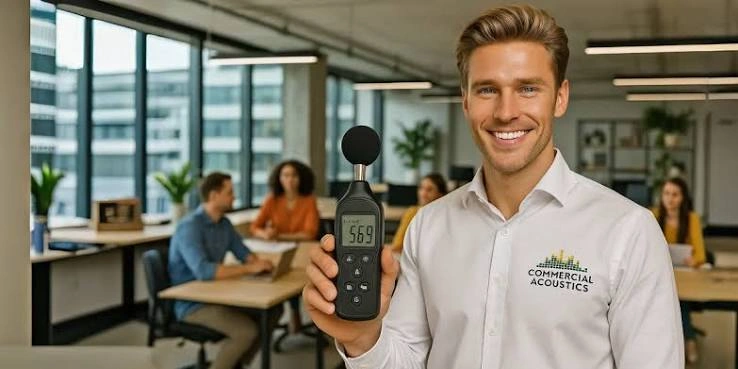
A general materials supplier can sell you a perforated panel. A specialist can tell you whether that panel is the right solution for your specific room, and prove it with a measurement based on recognized bodies like ISO Standards.
The practical differences show up in a few consistent places:
- A specialist measures before recommending reverberation time, surface reflectivity, and noise sources are assessed, not assumed
- A specialist’s recommendation is traceable to a standard (RT60, NC, STC targets) rather than a general “this usually works” claim
- A specialist offers services beyond product supply – consultancy, site inspection, and design-stage input, not just installation
- A specialist can explain why a particular product was chosen over an alternative, in terms specific to your space
Questions That Separate Specialists From Suppliers
Before committing to a company for an acoustic project, a handful of questions tend to reveal which category they fall into:

Do They Measure the Space Before Recommending a Product?
A specialist proposes a site assessment or survey before specifying treatment. A supplier is often ready to quote a panel type and quantity from a floor plan alone, without ever measuring how the room actually behaves acoustically.
Can They Explain the Target They’re Designing Toward?
Ask what RT60, NC, or STC target the proposed solution is meant to achieve, and why. A specialist has a direct answer, tied to the room’s function. A supplier will more often describe the product’s general features rather than a room-specific target.
Do They Offer Consultancy Independent of Product Sales?
A genuine specialist can advise on acoustic strategy without that advice being tied to a specific product they need to move. If every recommendation happens to be their own branded panel regardless of the room, that’s worth questioning.
Do They Work at Design Stage, Not Just After a Problem Exists?
Specialists are typically involved from concept design through construction, not only called in once a finished space already has a noise complaint. Design-stage involvement is a strong signal of genuine acoustic expertise rather than product-first selling.
The Range of Services a Genuine Acoustic Specialist Should Offer
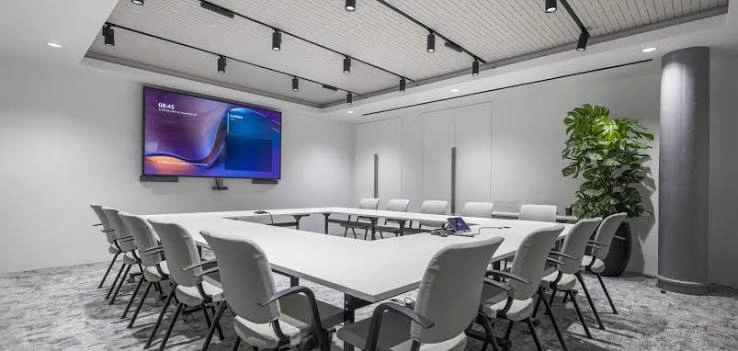
A company positioned as an acoustic specialist should be able to support a project across its full lifecycle, not just supply and install:
- Acoustic consultancy, both at design stage alongside architects and for existing spaces with a specific problem
- Site inspection and noise survey, with calibrated measurement rather than visual assessment alone
- Noise mapping for larger or multi-zone sites where exposure varies across the layout
- Product supply and installation, informed by the above rather than sold independently of them
- Compliance guidance against regional UAE Building Codes and Municipal Standards
Where the Distinction Matters Most in the UAE
The specialist-vs-supplier distinction has the biggest practical consequences on a specific set of project types common across the UAE:
Auditoriums, Conference Halls, and Multi-Purpose Venues
Getting diffusion and absorption balance wrong in a large volumetric space is expensive to correct after installation. This is where specialist modelling expertise earns its cost most clearly.
High-End Hospitality and F&B Fit-Outs
Reconciling an architecturally ambitious material palette with acoustic comfort requires genuine technical input, not a standard panel applied to a feature wall.
Healthcare and Educational Facilities
Speech privacy and intelligibility requirements in these settings are often tied to functional or regulatory standards that a general supplier isn’t necessarily tracking.
Mixed-Use and Multi-Tenant Developments
Sound transmission between unrelated occupancies is a structural and material problem that needs specialist assessment, not a retrofit panel applied after a complaint arrives.
Acoustic Specialist vs. General Materials Supplier
| Factor | Acoustic Specialist | General Materials Supplier |
|---|---|---|
| Starting point | Measurement and target-setting | Product catalogue |
| Recommendation basis | RT60/NC/STC data specific to the space | General product suitability |
| Services offered | Consultancy, survey, mapping, design input, installation | Supply and installation only |
| Typical involvement | From design concept through completion | After a product decision is already made |
| How success is verified | Measured performance against target (ASTM International standards) | Visual finish and product delivery |
How Opus Acoustic Positions Itself as a Specialist, Not a Supplier
Opus Acoustic runs acoustic consultancy, site inspection, and noise survey and mapping services as distinct offerings from its product supply, specifically so a project’s acoustic strategy is set independently of any single product line. Real-world case data from commercial office fit-outs in Dubai shows pre-consultancy prevents up to 35% unnecessary material over-specification. Related guides worth reading if you’re evaluating a project’s needs: what an acoustic consultant does for an existing space, how design-stage consultancy works with architects, and what a noise survey and noise mapping engagement each involve.
Frequently Asked Questions
Ask whether they measure the space before recommending a product, whether they can name the acoustic target they’re designing toward, and whether they offer consultancy independent of product sales.
Specialist involvement adds a consultancy or survey cost upfront, but it typically reduces total project cost by avoiding a wrongly specified installation that needs correcting later.
Yes. The scope scales down—a single room may only need a brief assessment rather than a full site survey—but the same measurement-first approach applies regardless of project size.
Not necessarily. A specialist’s consultancy and specification work can be independent of the installer, allowing the client to take a specification to any contractor.
Look for recommendations traceable to recognised standards such as ASTM C423, ISO 3382, or defined NC/STC targets, rather than general claims of experience alone.
Opus Acoustic operates across Dubai, Abu Dhabi, Sharjah, and all UAE Emirates.
Talk to an Acoustic Specialist
Get a measurement-based recommendation before you commit to a product.
Coverage: Dubai, Abu Dhabi, Sharjah & all UAE Emirates
Phone: +971 50 826 5672