
What Does an Acoustic Consultant Do? (UAE Guide)
An acoustic consultant measures how a space actually behaves – reverberation time, surface reflectivity, and noise sources and specifies a treatment that closes the gap to a defined target such as an NC rating or RT60 benchmark.
Unlike a product supplier, a consultant’s recommendation is independent of any specific brand or panel type, and is documented in a written specification before any material is ordered.
If a contractor, architect, or facility manager has ever told you “just add some panels,” that’s a guess dressed up as advice. An acoustic consultant doesn’t guess – they measure a space, model how sound will behave in it, and specify a solution that’s tied to a number, not a hunch.
This guide explains what acoustic consultants actually do, when a project needs one, and what separates a proper consultancy process from a product sales pitch.
This guide walks through the role of an acoustic consultant on a UAE project – what they assess, which standards they work against, and how their input changes a project’s outcome. It draws on the consultancy methodology used by Opus Acoustic, the specialist acoustic design division of Opus Building Materials, across commercial, hospitality, and residential projects in the UAE.
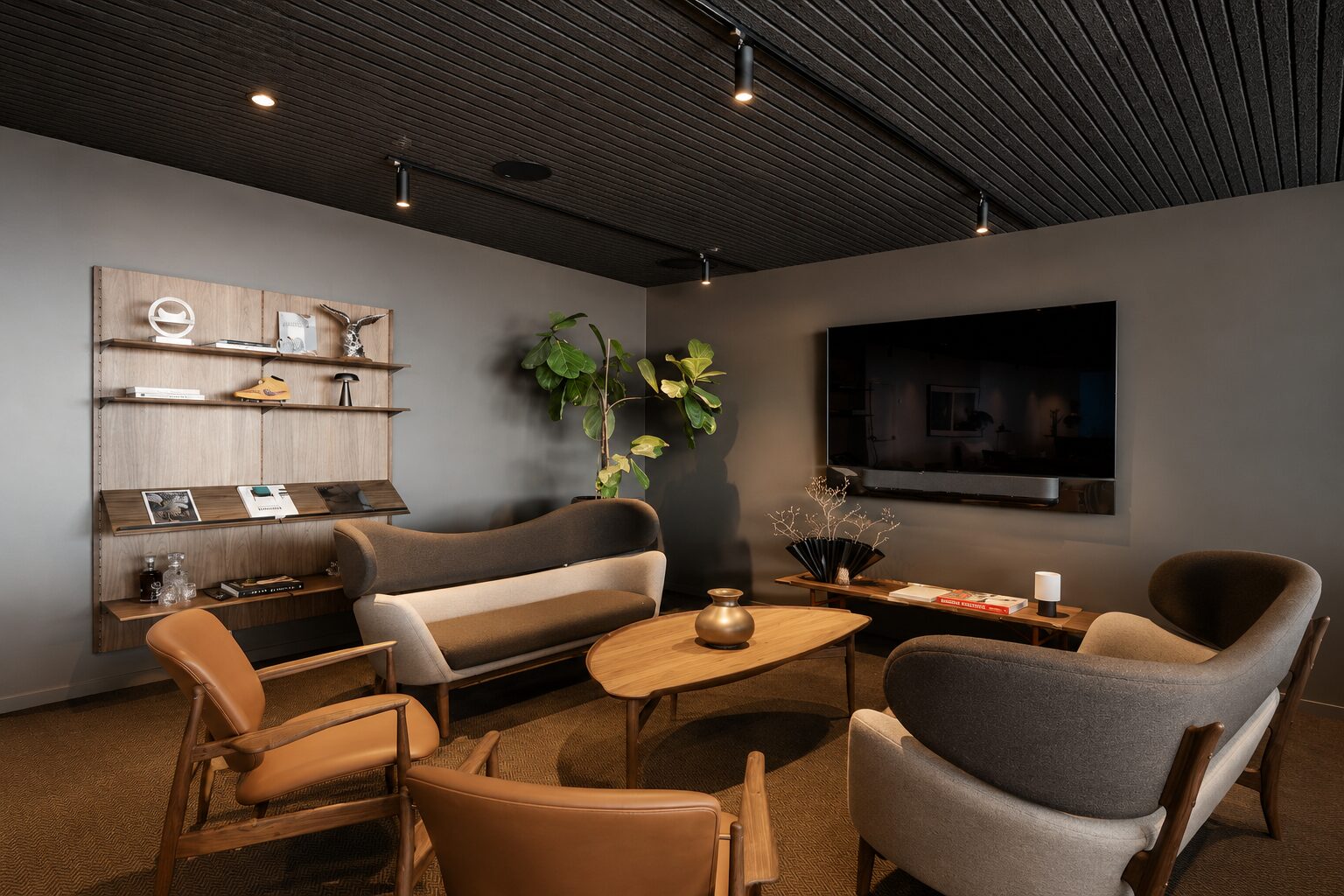
Why a Consultant Comes Before a Specification, Not After
Acoustic treatment is not a one-size-fits-all product. A boardroom, an open-plan office, and a mosque all have completely different acoustic targets the same perforated panel that fixes one can be the wrong call entirely in another. The variable isn’t the product catalogue; it’s whether someone worked out what the room actually needs before it was ordered.
An acoustic consultant establishes three things that no product brochure can:
- What acoustic performance the space is legally or functionally required to meet (NC rating, reverberation time, sound transmission class)
- Where the problem in the room actually originates reflected sound, transmitted sound, or mechanical noise
- Which combination of treatment, if any, resolves it within the project’s budget and design constraints

The Standards Behind the Advice
A consultant’s recommendations are traceable to published acoustic standards, not personal preference. Reverberation time (RT60) is measured and compared against room-type targets set out in ASTM C423 and ISO 3382. Sound transmission between spaces is assessed against Sound Transmission Class (STC) ratings, and background noise levels are checked against Noise Criteria (NC) targets appropriate to the room’s function – an NC-30 target for a boardroom is very different from an NC-45 tolerance in a plant room. Working from these standards is what lets a consultant say a space needs a specific outcome, and then hold any proposed product against that outcome before it’s approved.
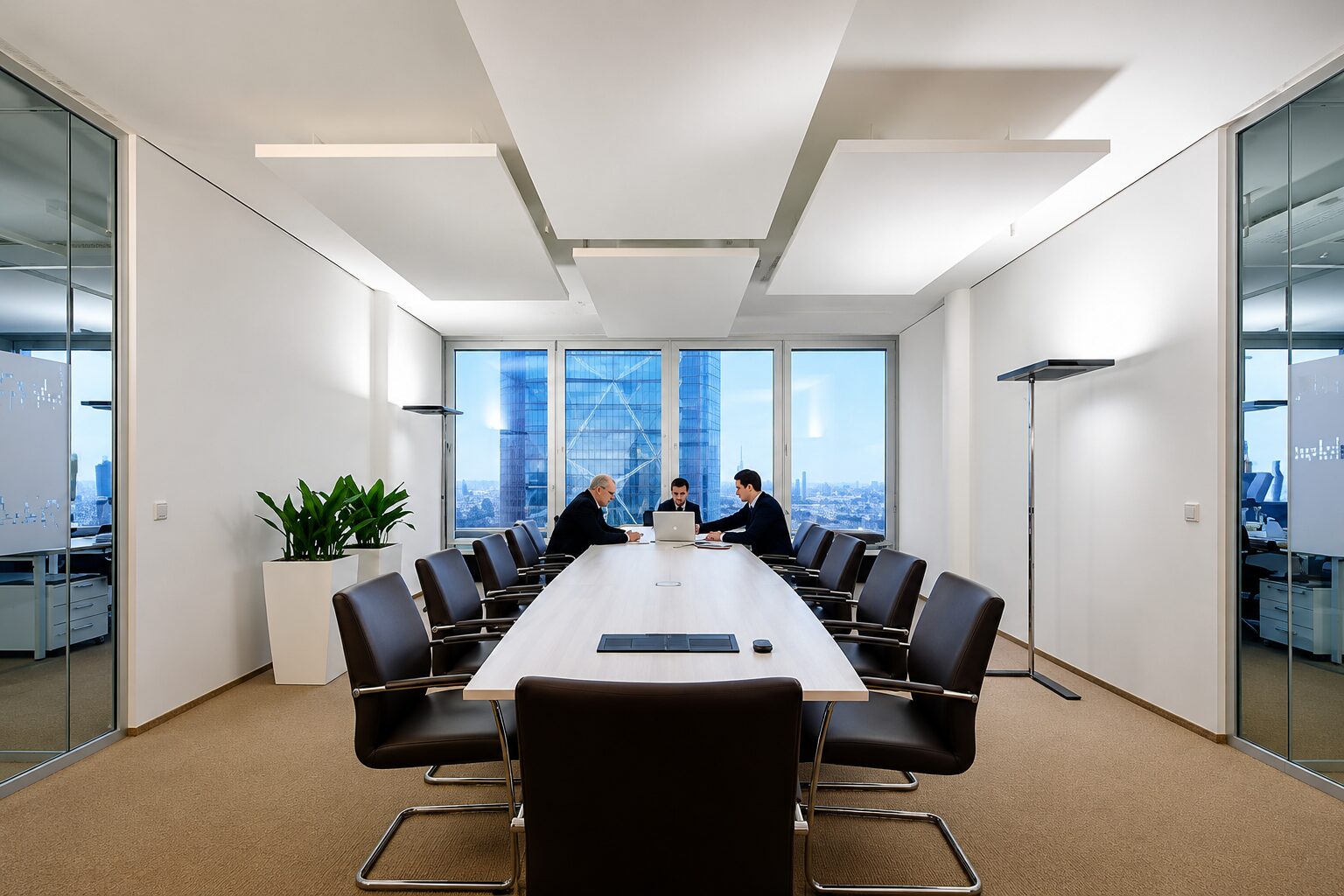
UAE-Specific Factors an Acoustic Consultant Has to Account For
Acoustic consultancy in Dubai, Abu Dhabi, or Sharjah has to factor in conditions that don’t apply everywhere:
Glass, Marble, and Concrete Interiors
Glass curtain walls, polished marble floors, and exposed concrete dominate UAE commercial and hospitality interiors. These are all highly reflective surfaces, which means rooms that look architecturally striking often measure far above comfortable reverberation targets before any treatment is specified a consultant has to design around materials the architect has already committed to.
Continuous HVAC Load
Air conditioning runs year-round in the UAE, and HVAC noise is a constant contributor to poor acoustic comfort. A consultant has to separate genuine room acoustics issues from mechanical noise coming through ductwork, diffusers, or wall penetrations – treating wall reflections won’t fix a noisy AHU.
Fire, Building Code, and Civil Defense Compliance
Any acoustic product specified for a UAE commercial project has to meet fire safety requirements set by local Civil Defense authorities. A consultant who isn’t checking material fire ratings alongside acoustic performance can recommend a product that gets rejected at inspection stage an expensive sequence to discover late.
Mixed-Use and Multi-Tenant Buildings
Many UAE developments combine retail, hospitality, and residential in a single structure. A consultant working on this type of project has to account for sound transmission between unrelated tenants, not just room acoustics within a single space.
How an Acoustic Consultancy Engagement Works, Step by Step
1. Initial Briefing
The consultant gathers context on the space: its intended use, any known noise complaints, existing drawings, and project constraints such as budget, ceiling access, or design restrictions.
2. Site Survey and Measurement
Where the project justifies it, the consultant measures room dimensions, surface materials, and reverberation time directly, rather than estimating from generic tables. This is the same data-led process used in a standalone acoustic site inspection.
3. Target Setting
The consultant defines the acoustic target for the space – an NC rating, RT60 target, or STC requirement – based on the room’s function and any applicable code or client brief.
4. Gap Analysis
Measured performance is compared against the target to establish exactly how far the space is from where it needs to be, and which surfaces are driving the gap.
5. Solution Modelling
The consultant models which treatment – absorptive panelling, diffusion, isolation, or a mechanical fix – closes the gap most efficiently, factoring in ceiling access, ADA/fire compliance, and design intent.
6. Specification and Handover
A proper consultancy engagement ends with a written specification: product type, coverage area, and installation method – something a contractor can price and build from, and a client can review before committing to a supplier.
What an Acoustic Consultant Catches That a Direct Product Order Misses
- The wrong frequency range being targeted – flat panels ordered when the actual complaint is low-frequency boom near corner bass traps
- Treatment concentrated on the most visible wall, while the true primary reflection points often the ceiling or side walls go untreated
- Noise being blamed on room acoustics when a meaningful share is coming from HVAC or an adjoining space, which no amount of wall panelling will fix
- A ceiling grid that isn’t rated to carry the suspended treatment system being proposed
Where Acoustic Consultancy Makes the Biggest Difference
| Project Type | What a Consultant Typically Catches |
|---|---|
| Corporate offices & boardrooms | Glass partitions and hard ceilings pushing RT60 well above comfortable speech levels |
| Hotels & F&B venues | Conflicting acoustic needs speech clarity vs. natural reverberation for live music or events |
| Auditoriums & conference halls | Uneven coverage causing dead spots or excessive echo across the seating plan |
| Healthcare facilities | Sound transfer between consultation rooms compromising patient privacy |
| Educational spaces | RT60 above the range recommended for teaching and speech intelligibility |
| Industrial & plant rooms | Occupational noise exposure levels relevant to UAE workplace safety limits |
How Opus Acoustic Approaches Consultancy
This is the methodology Opus Acoustic applies across the acoustic consultancy and installation projects it runs for Opus Building Materials clients: measured or code-referenced targets, a gap analysis against the existing space, and a written specification before any product is proposed. The goal is straightforward a client should be able to see the reasoning behind a recommendation, not just receive a quote.
Frequently Asked Questions
A consultant assesses a space against acoustic targets and recommends a solution independent of any specific product line. A supplier sells and installs acoustic products. Opus Acoustic offers both – consultancy first, so any product recommendation is grounded in the room’s actual requirements.
Any space with a functional acoustic requirement – speech privacy, noise compliance, broadcast or recording use, or a history of complaints – benefits from a consultant. A single room with an obvious echo problem may not need a full consultancy engagement.
This depends on the size and complexity of the space, but an initial site assessment and target-setting phase is typically completed within a few working days for a standard commercial space.
No. Consultancy is used just as often on existing buildings where occupants report noise issues, as it is on new developments at design stage.
A consultant designs against relevant fire, safety, and acoustic codes, but formal compliance sign-off remains the responsibility of the project’s certifying authority. A properly specified solution significantly reduces the risk of rejection at inspection.
Yes. The assessment and specification are a standalone service you’re free to take the specification to any contractor.
Book an Acoustic Consultation
Get an evidence-based acoustic specification before you spend on treatment.