
Acoustic Ceiling Panels: Benefits and Applications
Acoustic ceiling panels reduce noise, improve speech clarity, and elevate interior design in offices, hotels, and commercial spaces. Here’s how OpusBM engineers ceiling solutions built for UAE projects.
Ever stepped into a room and felt the noise hit you before anyone even spoke? Nine times out of ten, the ceiling is part of the problem. A flat, hard ceiling bounces sound straight back down, turning normal conversation into echo and static – something anyone who’s sat in a glass-walled Dubai office or a marble-floored lobby has probably noticed without knowing why.
That’s the gap acoustic ceiling panels are built to close: catching sound before it reflects, instead of letting a room fight itself. By the end of this guide, you’ll know what these panels actually do, which OpusBM products suit which problem, and how to land on the right choice for your own space.
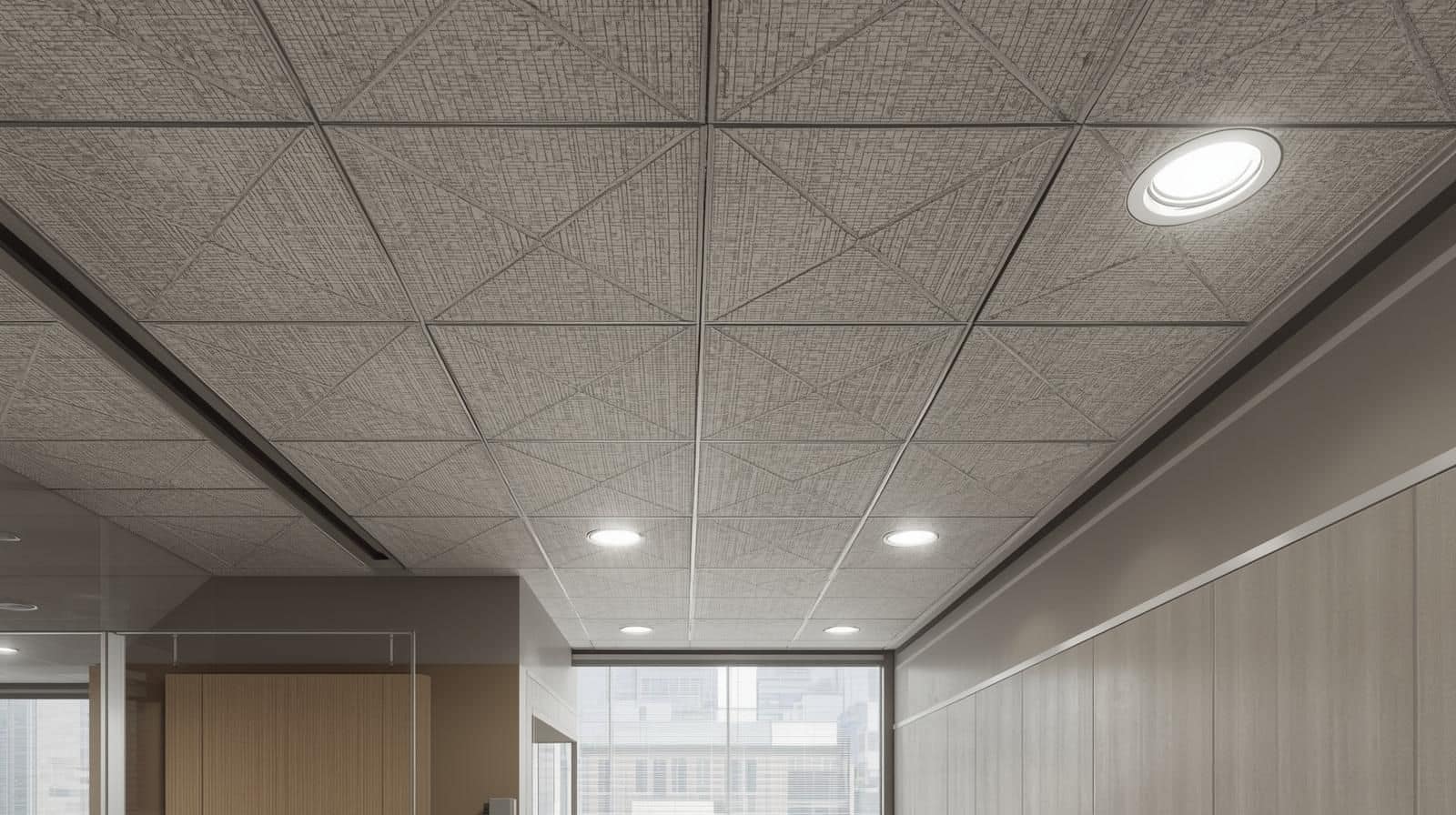
What Are Acoustic Ceiling Panels?
At their core, acoustic ceiling panels are materials mounted on or hung from a ceiling specifically to soak up sound rather than bounce it. Standard ceiling tiles aren’t built for this job—acoustic versions use felt, perforated timber, or mineral fiber cores engineered to trap sound energy instead of reflecting it back into the room.
Performance is usually expressed through the Noise Reduction Coefficient (NRC), a number between 0 and 1 showing how much sound a panel absorbs versus reflects. Take a panel rated 0.85: roughly 85 out of every 100 units of sound hitting it get absorbed, with only a small fraction bouncing back.
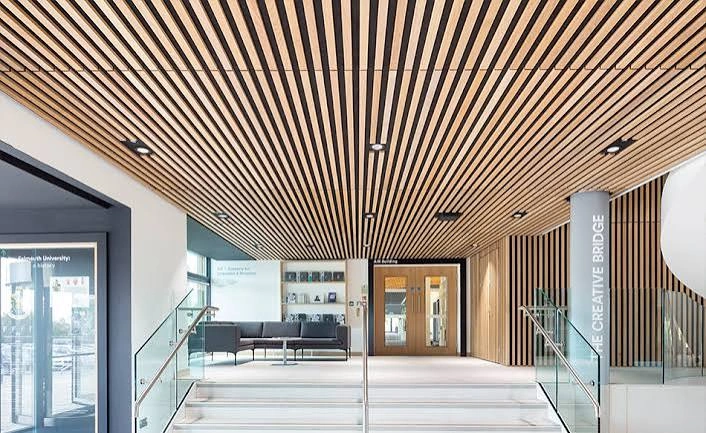
Key Benefits of Acoustic Ceiling Panels
Noise Reduction and Echo Control
Cutting echo is the headline job of any acoustic ceiling panel. Spaces built around glass, polished concrete, or hard flooring—a familiar combination in newer UAE fit-outs—give sound nowhere to go but back into the room. A ceiling panel intercepts that path, pulling reverberation down noticeably.
Improved Speech Clarity
Reverb doesn’t just sound bad—it makes people harder to understand. Boardrooms, lecture halls, and open-plan offices all suffer when reflected sound piles on top of speech. Once panels absorb that excess reflection, calls, presentations, and ordinary conversation all get easier to follow.
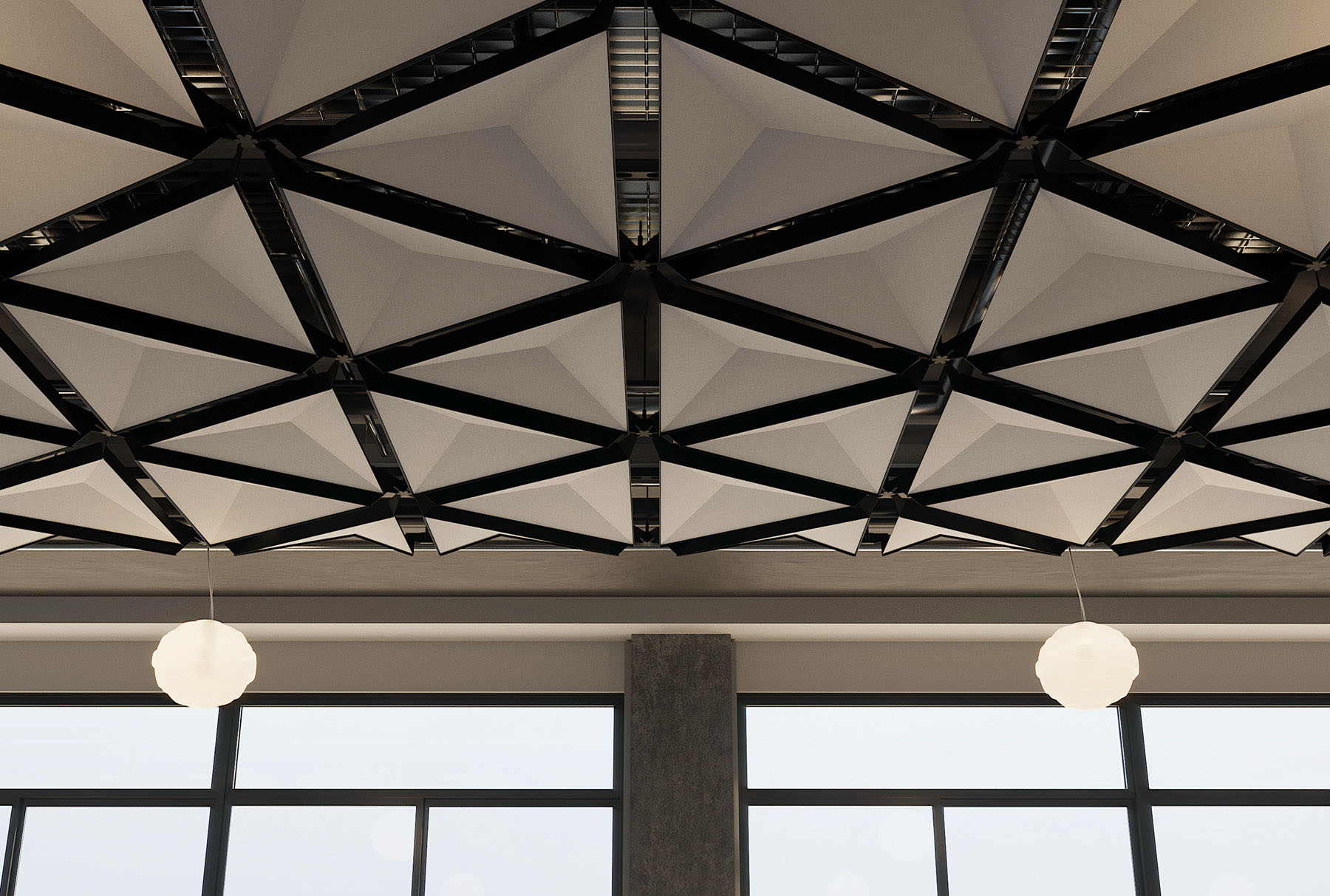
Design Flexibility
Gone are the days when acoustic treatment meant ugly foam tiles. OpusBM’s ceiling range spans:
- AcouFELT — felt panels available across a broad color palette
- AcouWOOD / AcouMDF — timber-look options that soften a space visually while still doing acoustic work
- Diffusers — sculptural pieces that scatter rather than absorb sound, adding visual interest to larger rooms
- Astic Ceiling Tile — modular systems built to drop into standard suspended grids
None of this forces a trade-off between how a ceiling looks and how it performs.

Fire Safety Compliance
On any UAE commercial job, fire performance isn’t optional — it’s a baseline requirement, not a nice-to-have. Panels worth specifying carry certifications like Class A or Class 0 (ASTM E84), satisfying Dubai Civil Defence rules for commercial and public buildings.
Low Maintenance, Long Lifespan
Upkeep is minimal — usually just a vacuum pass or a dry wipe now and then. Paint fades, finishes wear thin, but the acoustic core underneath keeps absorbing sound for years without needing to be touched.
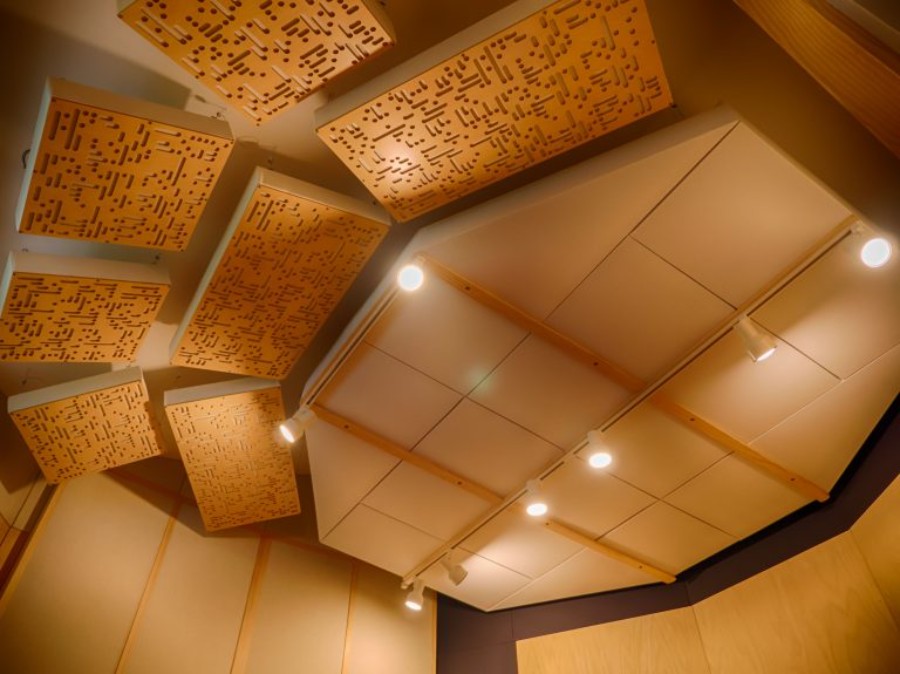
Acoustic Ceiling Panel Types by Opus Acoustics
OpusBM’s architectural acoustics lineup covers both commercial and residential projects across the UAE:
- AcouFELT — lightweight felt panels, wide color range
- AcouWOOD / AcouMDF — timber-finish panels that pair natural texture with acoustic function
- Acoustic Ceiling Tile — modular tiles for suspended grid systems
- Diffusers — sculptural elements that spread sound evenly through larger volumes
- Soundproofing Wall & Ceiling Systems — for jobs where the ceiling alone can’t carry the whole fix and the walls need to pull weight too
- Polyurethane Foam Panels — budget-conscious absorption for industrial settings
Where Acoustic Ceiling Panels Are Used
OpusBM has installed ceiling acoustic treatment across a wide range of settings:
- Auditoriums & theatres – keeping dialogue and music distinct as room volume climbs
- Cinemas & screening rooms – flattening echo so mixed audio plays back the way it was intended
- Corporate & commercial offices – trimming the background noise that breaks concentration in open layouts
- Hospitality (hotels & resorts) – softening lobbies and dining areas into calmer spaces
- Educational spaces – helping teachers and students actually hear each other clearly
- Healthcare facilities – lowering ambient noise in waiting rooms and treatment areas
- Residential spaces – home cinemas and quieter living rooms
- Industrial & plant rooms – bringing equipment noise down to safer working levels
Key takeaway: if a room has hard, flat surfaces and feels “echoey” the moment you walk in, the ceiling is usually the cheapest place to start fixing it.
How to Choose the Right Acoustic Ceiling Solution
- Pin down the actual problem. Plain echo calls for high-NRC absorptive panels; noise passing between floors may need STC-rated insulation on top of that.
- Look at the NRC number. Anything 0.70 or above will make a real difference in most commercial rooms.
- Check fire compliance first. Confirm panels meet UAE Civil Defence standards for your specific building type before anything else.
- Match material to purpose. AcouFELT suits budget-conscious commercial jobs, AcouWOOD/AcouMDF fits premium interiors, diffusers work best in big open volumes.
- Get the room measured, not guessed at. OpusBM’s Acoustic Site Inspection team checks reverberation time, surface types, and existing noise levels on-site, then bases the recommendation on that data rather than a generic template.
FAQs
Do acoustic ceiling panels really make a difference?
Yes. Properly specified and fitted, they cut echo and reverberation noticeably, especially in rooms dominated by hard, reflective surfaces.
What NRC number should I be looking for?
In most commercial settings – offices, hotels, boardrooms – 0.70 or higher is where the improvement becomes obvious.
Are OpusBM’s ceiling panels fire safe?
Yes. They carry Class A or Class 0 certification (ASTM E84), meeting UAE Civil Defence rules for commercial installs.
My space is already built out – can panels still go in?
In most cases, yes. Acoustic ceiling panels typically retrofit onto existing ceilings without any major structural work, making them a practical add-on during a renovation rather than a rebuild.
Conclusion
Few upgrades buy as much everyday comfort for as little ongoing hassle as a properly chosen acoustic ceiling. Whether the goal is quieting an open office, softening a hotel lobby, or planning acoustics into a new fit-out from scratch, getting the panel type and NRC rating right makes the difference between a room that works and one that just looks finished.
OpusBM supplies and fits fire-rated acoustic ceiling panels built to UAE commercial standards — from AcouFELT and AcouWOOD through to full soundproofing systems. Book a consultation and let’s design your sound.